Garage door weatherstripping problems affect energy bills, indoor comfort, and the long-term condition of your garage floor and belongings. A damaged garage door weatherstrip lets cold air, hot air, rain, pests, and dust pass freely through the gaps it should seal. Garage door seal problems that go unaddressed lead to water damage along the floor, rust on metal components, and higher heating and cooling costs every month. Knowing the types of garage door weatherstripping that exist on your door helps you identify which section has failed and choose the right fix. Whether you need garage door weatherstrip repair on a cracked side seal or a full garage door bottom seal replacement after years of compression damage, this guide covers every sign, cause, and solution so you can fix garage door weatherstripping problems before they cost you more.
What Garage Door Weatherstripping Does
Garage door weatherstripping creates a flexible seal between the door and its frame at three locations: the bottom of the door against the floor, the two sides of the door against the door frame, and the top of the door against the header. Each location uses a different type of seal material suited to the specific movement and pressure at that point.
A properly sealed garage door keeps outside air, water, insects, and rodents out of the garage. It also keeps conditioned air inside if the garage connects to the living space or contains a water heater, HVAC equipment, or finished space. When garage door weatherstripping problems develop at any of these three locations, the door loses its ability to perform these functions and the consequences compound over time.
Signs of Garage Door Weatherstripping Problems
Catching garage door seal problems early prevents the secondary damage that makes repairs more expensive. These are the most reliable signs that weatherstripping has failed or is close to failing.
Visible light around the door edges
Stand inside the garage with the door closed and the lights off. Any light visible around the perimeter of the door confirms a gap where the weatherstrip has compressed, cracked, torn, or pulled away from the frame. Light gaps at the bottom corners are the most common location for this type of garage door weatherstripping problem.
Drafts inside the garage
A cold draft along the floor or walls of the garage with the door closed points directly to a failing garage door seal. The bottom seal is the most frequently damaged section and produces the most noticeable draft when it fails. Side seal problems create drafts at the upper corners and along the vertical frame edges.
Water on the garage floor after rain
Water pooling along the base of the door after rain confirms that the bottom seal no longer creates a watertight barrier. This is one of the most urgent garage door seal problems because standing water accelerates rust on the door bottom rail, damages stored items, and can migrate toward a finished floor or wall if the garage connects to living space.
Insects, rodents, or debris inside the garage
A gap in any section of the weatherstrip is wide enough for insects to pass through and large enough for mice to squeeze under a worn bottom seal. If you regularly find insects, mouse droppings, or outdoor debris inside the garage, garage door weatherstripping problems at the bottom or sides are almost certainly the entry point.
Higher energy bills
A garage door that connects to a living space or contains HVAC equipment acts as part of the home’s thermal envelope. Failed weatherstripping on that door creates the same energy loss as a poorly sealed window or door elsewhere in the house. Resolving garage door weatherstripping problems in a connected garage often produces a measurable reduction in monthly energy costs.
Cracked, torn, or compressed weatherstrip visible on inspection
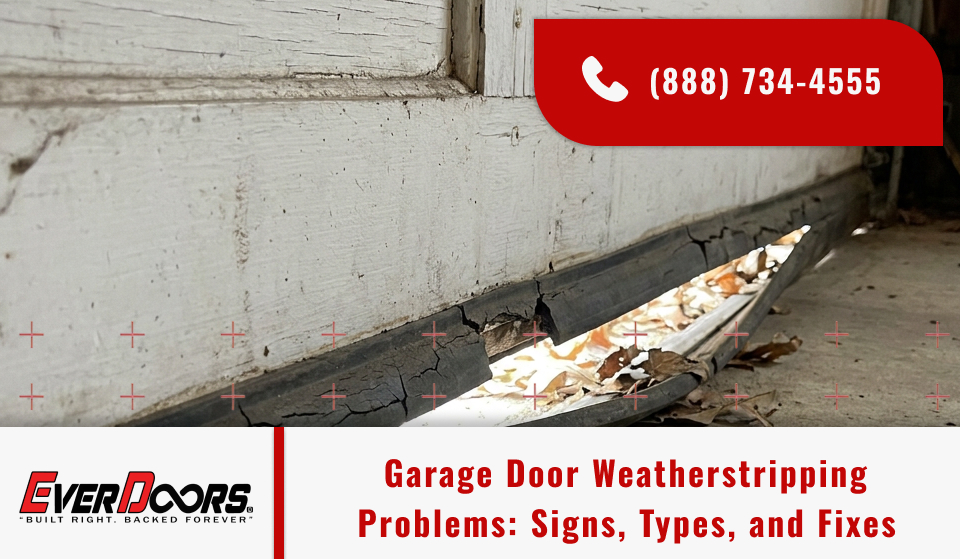
A visual inspection of the weatherstrip around the full perimeter of the door reveals the most obvious garage door seal problems. Weatherstrip that has cracked, split, become brittle, or compressed flat against the door frame no longer functions as a seal regardless of how the door appears from the outside.
Quick check: Run your hand along the bottom seal and both side seals with the door closed. Any section that feels stiff, brittle, or leaves a gap when you press it lightly has failed and needs garage door weatherstrip repair or replacement.
Types of Garage Door Weatherstripping
Understanding the types of garage door weatherstripping on your door determines the correct replacement product and installation approach. Each location uses a different seal design suited to the specific gap and movement it must accommodate.
Bottom seal
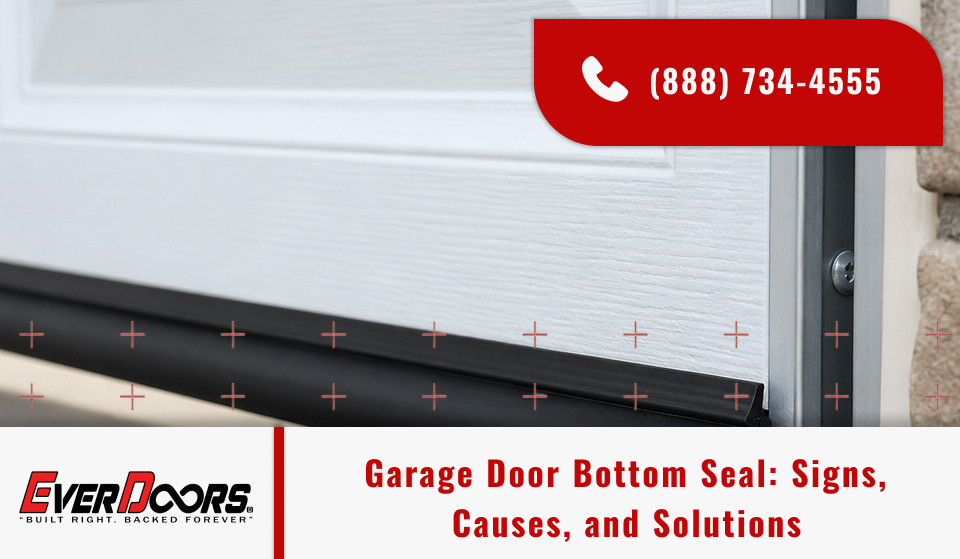
The bottom seal attaches to the bottom rail of the door and presses against the floor when the door closes. It must flex to conform to an uneven floor surface while still creating a complete seal. Bottom seals come in several profiles: T-slot seals that slide into a channel on the bottom rail, nail-on seals that attach directly to the rail face, and bulb seals that compress against the floor surface. Garage door seal types in the bottom position vary by door manufacturer and rail design. Matching the correct profile to your existing rail avoids installation problems.
Side seals
Side seals mount to the door frame on each vertical side and press against the door face when it closes. They are typically made of flexible vinyl or rubber in a J-shaped or P-shaped profile. Side seal garage door weatherstripping problems are less common than bottom seal failures because the side seals experience less wear, but UV exposure and temperature cycling cause them to become brittle and crack over time.
Top seal
The top seal mounts to the door frame above the door opening and presses against the top panel of the door when it closes. It functions similarly to the side seals and fails for the same reasons. Top seal failures are less obvious than bottom or side seal failures because water and light gaps at the top of the door are harder to spot during a casual inspection.
Stop molding with integral seal
Many garage doors use a stop molding that combines a rigid wood or PVC frame member with an integral rubber or vinyl seal face. The seal portion compresses against the door face when closed. When the seal portion fails, the entire stop molding needs replacement rather than just a strip of weatherstrip material.
Note on types of garage door weatherstripping: Always bring a section of the old weatherstrip to the hardware store or share a photo with your technician before purchasing replacement material. Bottom seal profiles in particular vary significantly between door manufacturers and even between models from the same manufacturer.
What Causes Garage Door Weatherstripping Problems
Understanding what degrades weatherstripping helps you choose more durable replacement materials and extend the time between repairs.
Age and UV exposure
Weatherstrip materials are flexible polymers that degrade with age. UV radiation from sunlight accelerates this process, causing the material to become stiff and brittle. A brittle weatherstrip cracks under the compression it experiences every time the door closes. Most residential garage door weatherstripping has a service life of five to ten years depending on climate and sun exposure.
Temperature extremes
Repeated freezing and thawing cycles stress the seal material and cause it to lose flexibility faster than it would in a moderate climate. In very cold climates, the bottom seal can freeze to the floor surface overnight and tear away from the bottom rail when the door opens in the morning. Using a silicone-based lubricant on the bottom seal before freezing temperatures arrive prevents freeze bonding.
Physical wear from door operation
The bottom seal contacts the floor with every close cycle. On concrete floors with any surface roughness, this creates abrasion that gradually wears through the seal material. Heavier doors with higher closing force wear through bottom seals faster than lighter doors with well-adjusted spring tension.
Pest damage
Mice and other rodents chew through rubber and vinyl seals to create or enlarge entry points. This type of garage door weatherstripping damage is concentrated at the bottom corners where the seal meets the side frame, which is the same location that most pest intrusion occurs.
Improper installation of previous repair
A bottom seal installed in the wrong profile for the door’s rail channel will not seat correctly, will not compress evenly against the floor, and will fail faster than a correctly matched seal. If your door has had recent garage door weatherstrip repair that is already failing, mismatched seal profile is the most likely explanation.
Garage Door Weatherstrip Repair: What You Can Fix Yourself
Several garage door weatherstripping repairs are safe and straightforward for homeowners without professional tools.
Safe DIY weatherstrip tasks
- Replacing the bottom seal on a T-slot rail by sliding the old seal out of the channel and sliding a matching replacement in
- Replacing nail-on side seals by removing the old fasteners and installing new seal strips with galvanized nails or screws
- Cleaning compressed weatherstrip with silicone lubricant to temporarily restore flexibility on mildly compressed sections
- Applying weatherstrip adhesive to reattach sections of side or top seal that have pulled away from the frame
A garage door bottom seal replacement on a T-slot door is one of the most accessible DIY garage door repairs. The old seal slides out of the channel from the side of the door and the new one slides in. No tools are required beyond a utility knife to trim the new seal to length.
When to call a professional
Garage door weatherstrip repair becomes a professional task when the bottom rail itself is bent or damaged and prevents the seal from seating correctly, when the stop molding needs full replacement rather than just the seal strip, or when multiple sections of weatherstripping have failed simultaneously and a full perimeter replacement is more cost-effective than patching each section individually. A technician can also identify whether weatherstripping failure is a symptom of a larger alignment or balance problem that is causing the door to press unevenly against the seals.
Garage Door Bottom Seal Replacement: Costs and What to Expect
Garage door bottom seal replacement is the most common weatherstripping service call and one of the most affordable garage door repairs.
- DIY bottom seal replacement: $15 to $40 in materials depending on door width and seal profile
- Professional bottom seal replacement: $75 to $150 including labor and materials
- Full perimeter weatherstrip replacement: $150 to $300 professionally installed
- Stop molding replacement with integral seal: $200 to $400 depending on door size and material
Most garage door technicians recommend inspecting all weatherstrip locations during a bottom seal replacement visit. If the side or top seals are also showing wear, replacing the full perimeter at the same time costs less than returning for a second service call within a year.
Preventing Garage Door Weatherstripping Problems
A simple maintenance routine extends the life of every section of weatherstripping on the door.
- Inspect all weatherstrip locations twice per year. Check the bottom seal, both side seals, and the top seal for cracks, compression, tears, or gaps. Spring and fall are the best times because they bracket the seasons of highest thermal stress.
- Lubricate the bottom seal before winter. Apply a silicone spray to the bottom seal before freezing temperatures arrive. This prevents the seal from bonding to the floor and tearing away when the door opens.
- Keep the floor area below the door clear. Debris on the floor under the door causes the bottom seal to compress unevenly and wear faster at specific points.
- Adjust door closing force if the door slams. A door that closes too hard compresses the bottom seal with excessive force on every cycle. This accelerates wear and shortens the seal’s service life significantly.
- Address alignment problems promptly. A garage door that is out of alignment presses harder against the weatherstrip on one side than the other. This causes uneven wear and creates gaps on the side where the door pulls away from the frame. Fixing the alignment protects the weatherstripping from premature failure.
Fix Garage Door Weatherstripping Problems Before They Damage Your Garage
Garage door weatherstripping problems that start as a small draft or a thin light gap at the door edge become water intrusion, pest entry, and significant energy loss if they go unaddressed. A damaged garage door weatherstrip costs very little to repair when caught early. Left until the seal fails completely, it contributes to floor damage, rust on the door components, and ongoing energy waste that adds up season after season. Whether you need a quick garage door weatherstrip repair on one section or a full garage door bottom seal replacement with perimeter inspection, Everdoors is ready to help. Contact us today to schedule a service visit and get your garage door sealed properly again.
Phone: (888) 734-4555
Email: info@everdoors.com
Website: https://www.everdoors.com/