Garage door hinge problems affect thousands of homeowners every year, yet most people don’t realize a hinge is failing until the door starts making noise or a panel begins to shift. Whether you’re dealing with garage door squeaking hinges that wake the neighborhood, broken garage door hinges that leave panels wobbling, or you’re trying to understand garage door hinge types before buying replacement hardware — this guide covers it all. We’ll walk through the signs that point to hinge trouble, explain what causes hinges to wear out, outline your garage door hinge repair options, and break down everything you need to know about garage door hinge replacement so you can decide whether to fix garage door hinges yourself or call a professional.
What Garage Door Hinges Do
A sectional garage door is made up of four to six stacked horizontal panels. Hinges connect those panels together and allow them to flex as the door travels through the curved section of the track — transitioning from vertical (closed) to horizontal (open). Without functional hinges, the panels cannot bend around that curve and the door cannot operate at all.
Hinges also serve a structural role. They distribute the door’s weight evenly across all panels and reduce strain on the rollers, cables, and opener motor. A failed hinge shifts that load onto every surrounding component, accelerating wear across the entire system.
Garage Door Hinge Types: The Numbering System Explained
Understanding garage door hinge types is essential before purchasing replacements. Hinges are numbered #1 through #5, and each number indicates a different gauge, weight rating, and position on the door. Using the wrong type causes premature failure and is one of the most overlooked causes of repeat garage door hinge problems.
- #1 hinges — the most common type, connecting middle panels together. Standard gauge for most residential doors.
- #2 and #3 hinges — heavier gauge, used on taller or heavier doors and positions that bear more load.
- #4 and #5 hinges — the heaviest gauge, positioned at the top and bottom sections where stress from the track curve is greatest.
Numbered garage door hinges have the number stamped directly on the metal. Always match the replacement to that number. If you replace a #3 with a #1, the lighter gauge will flex under load and crack far sooner. A technician can identify the correct garage door hinge types for your door in minutes if you’re unsure.
Heavy-duty and commercial-grade hinges are available in the same numbering system. If your standard hinges keep failing, upgrading to a heavier-gauge version of the same number is a smart long-term fix.
Signs of Garage Door Hinge Problems
Catching garage door hinge problems early prevents minor wear from becoming a door that won’t move safely. These are the most common warning signs:
Garage door squeaking hinges or grinding sounds
Noisy garage door hinges are almost always the first symptom homeowners notice. A dry or corroded hinge creates friction where the roller stem passes through the hinge bore. If lubricating the hinges with a silicone-based spray doesn’t stop the squeaking within a day, the hinge is likely worn past the point where lubrication helps. Persistent garage door squeaking hinges usually mean the bore has worn oval and no longer holds the roller properly — that’s a replacement job, not a maintenance job.
Visible cracks or a gap in the hinge body
Steel hinges crack under repeated stress, especially when the door is out of balance or has taken an impact. A cracked hinge won’t hold its shape under load. If you spot a crack during inspection, replace the hinge before using the door again — a hinge that fails mid-operation can cause the panel above it to buckle or drop suddenly.
Loose bolts or stripped mounting holes
Hinges bolt through pre-drilled holes in each panel. Vibration gradually loosens these bolts, and if the hole itself strips out, the bolt spins freely and the hinge shifts under load. Loose hardware is one of the most common garage door hinge problems in doors older than five years and is often the first step toward a full hinge failure.
Panels that wobble, sag, or gap apart
A gap between panels or a panel that visibly flexes more than the others signals a hinge that has weakened or broken. Panels that separate while the door moves can jam the tracks, fray cables, or snap a roller stem — compounding what started as a simple broken garage door hinge into a much more expensive repair.
The door jerks, hesitates, or strains the opener
A stiff or damaged hinge resists bending at the curve of the track. This creates a catch point where the door hesitates mid-travel, and you may hear the opener motor strain or groan as it pushes through. Any door that jerks consistently at the same point in its travel almost always has a hinge problem at that exact location.
Stop using the door if it hesitates or jerks consistently in the same spot. Repeated stress at a failing hinge point can bend the track or snap a cable, turning a small repair into a much larger one.
What Causes Garage Door Hinges to Fail
Normal wear and cycle fatigue
Every open-and-close movement is one cycle. At four uses per day, a household logs roughly 1,500 cycles per year. Standard residential hinges are rated for 10,000 to 30,000 cycles depending on gauge. High-use households will reach that limit faster, and heavier doors put more stress on each cycle regardless of frequency.
Rust and corrosion
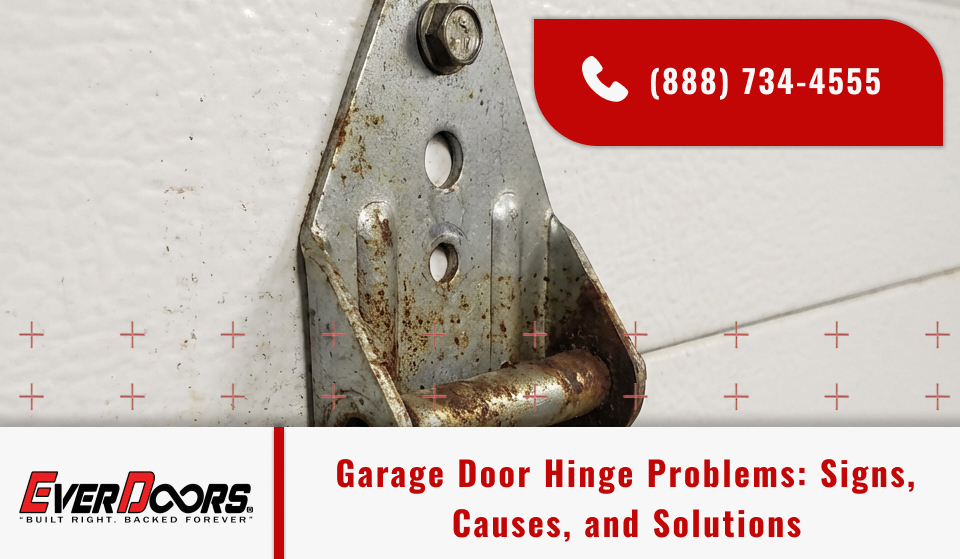
Moisture corrodes the hinge body and the roller bore from the inside out. In coastal and high-humidity climates, rust can cut a hinge’s service life in half. Noisy garage door hinges that have rusted through need replacement — lubrication cannot reverse structural corrosion. Stainless steel or galvanized hinges are worth the upgrade in humid environments.
Door imbalance
An unbalanced door tilts as it moves, forcing certain hinges to carry more load than they were designed for. If you find yourself needing to fix garage door hinges on the same side repeatedly, have the door’s balance and spring tension checked. Replacing hinges without fixing the imbalance means the new hardware will fail on the same accelerated schedule.
Impact damage
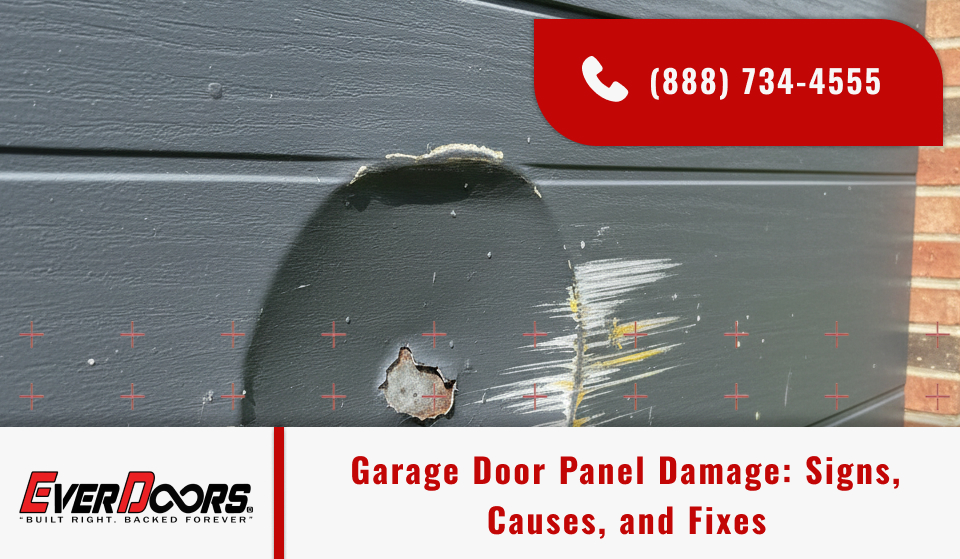
Backing into the door, a falling object, or wind forcing the door against its stops can crack hinges instantly. Even a minor impact that leaves no visible panel damage can fracture a hinge internally — it holds together until load finally causes it to give way.
Wrong hinge type or low-quality hardware
Budget doors sometimes ship with lighter-gauge hinges than the door’s weight demands. Using the wrong numbered garage door hinge in any position creates a chronic weakness. During garage door hinge replacement, always match or upgrade the gauge — never downgrade to save a few dollars.
Garage Door Hinge Repair: DIY vs. Professional
What homeowners can safely do
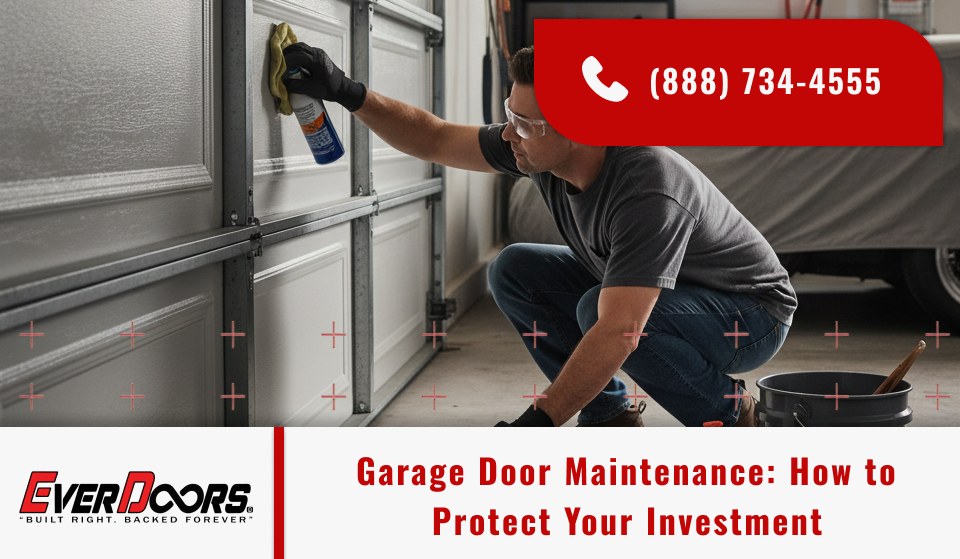
- Lubricate all hinges every six months with a garage-door-specific silicone or lithium spray
- Tighten loose hinge bolts with a wrench or socket set
- Repair a stripped bolt hole using a larger bolt, an anchor insert, or wood filler on wooden panels
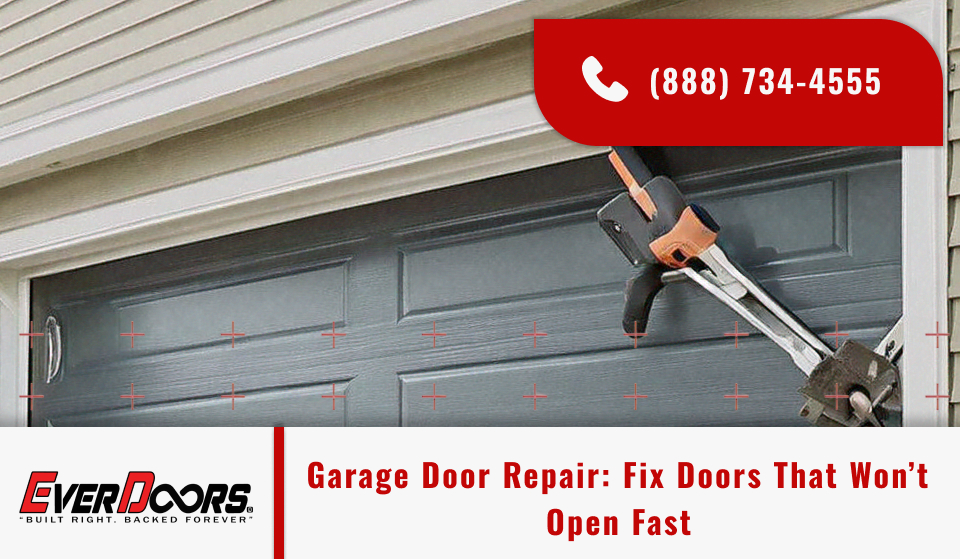
- Replace a single cracked hinge on a middle panel — with the door down, opener unplugged, and no spring hardware nearby
Basic garage door hinge repair is genuinely manageable for a confident homeowner. The key safety rule is to always unplug the opener and keep hands clear of the spring and cable hardware at the top of the door before attempting any work.
When to call a professional for garage door hinge repair
Garage door hinge repair becomes a professional job when multiple hinges have failed, when panels are misaligned, or when any hinge near the top section — close to the spring and cable drum — needs attention. That area remains under tension even when the door is closed. Working near tensioned spring hardware without proper training is one of the leading causes of serious garage door injuries.
A professional can also diagnose whether hinge failures are a symptom of a deeper issue — an unbalanced door, a fraying cable, or a track that is slightly out of alignment. Fixing only the hinges without resolving the root cause means the new hardware fails on the same accelerated timeline.
Garage Door Hinge Replacement: Costs and What to Expect
Garage door hinge replacement is one of the more affordable garage door repairs when handled early. Here’s a realistic breakdown:
- Single hinge replacement (DIY parts only): $5–$15 per hinge
- Full set — professional labor and parts: $125–$250 total
- Heavy-gauge or galvanized upgrade hinges: $15–$30 per hinge
- Hinge replacement with balance and hardware inspection: $150–$275
Most technicians recommend replacing all hinges at once when several have failed or when a door is older than ten years. Hinges age together — replacing only the broken ones leaves hardware of the same age in place, and those typically fail within the same season. The labor cost to replace all garage door hinges at once is far less than scheduling multiple service visits.
Stainless steel or galvanized hinges cost slightly more than standard steel but can double the service life in humid or coastal climates. Ask your technician about upgrading during your next garage door hinge replacement visit.
Preventing Garage Door Hinge Problems
A simple maintenance routine is the best way to avoid garage door hinge problems like garage door squeaking hinges before they start:
- Lubricate all hinges every six months — use a lithium-based or silicone spray, not WD-40
- Inspect each hinge for rust, cracks, or wobble during every lubrication session
- Check and tighten all hinge bolts annually
- Test door balance quarterly by lifting manually with the opener disconnected — the door should hold steady at waist height
- Schedule a professional inspection every one to two years to catch wear before it becomes a failure
Fix Garage Door Hinge Problems Before They Escalate
Garage door hinge problems that begin as noisy garage door hinges or a loose bolt can escalate into panel misalignment, track damage, or a door that fails completely — often faster than homeowners expect. The good news is that garage door hinge repair and hinge replacement are among the least expensive fixes on the door when caught early.
Whether you need a quick lubrication because of garage door squeaking hinges, a single broken garage door hinge swapped out, or a full assessment to find out why your hardware keeps wearing out, Everdoors is ready to help. Contact us today to schedule a service visit and get your door moving smoothly and safely again with different garage door hinge types.
Phone: (888) 734-4555
Email: info@everdoors.com
Website: https://www.everdoors.com/