Garage door roller problems cause grinding, binding, and uneven movement that puts stress on your entire door system. Identifying garage door roller issues early prevents track damage, opener strain, and the safety hazards that come from a door that moves unpredictably. Worn garage door rollers create loud sounds and jerky movement that worsen with every cycle. Furthermore, damaged garage door rollers can jump out of the track and leave your door stuck open or crooked in the opening. Garage door roller replacement restores smooth quiet operation and eliminates the strain that failing rollers place on connected components. In addition, knowing when to replace garage door rollers saves you from paying for track repairs and opener damage caused by neglected rollers. Understanding garage door roller types helps you choose the right upgrade for your needs.
Likewise, to help fix worn garage door rollers, comparing nylon vs steel garage door rollers reveals significant differences in noise, durability, and maintenance requirements. If your door sounds rough or moves unevenly, search for garage door roller problems near you to get a professional evaluation.
How Garage Door Rollers Work
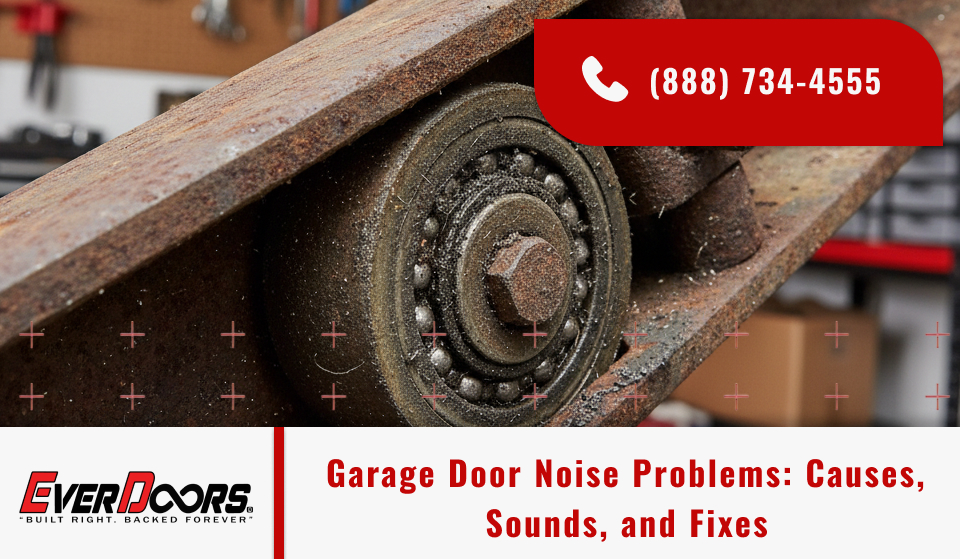
Garage door rollers are the small wheels that ride inside the metal tracks on both sides of your door. Specifically, they guide the door smoothly from the vertical opening to the horizontal position along the ceiling.
Here is how rollers function in your door system:
- Each roller sits on a stem that attaches to a hinge on the door panel
- The roller wheel rides inside the track channel as the door opens and closes
- Rollers at the bottom, middle, and top of the door handle different loads and angles
- The curved section of the track puts the most stress on the rollers during transition
- Standard residential doors use 10 to 12 rollers depending on the number of panels
- Each roller completes thousands of rotations per year under the full weight of the door
Because rollers bear the door’s weight and guide every movement, worn or damaged rollers affect the entire system. Therefore, roller condition directly impacts noise levels, track wear, and opener performance.
Common Signs of Garage Door Roller Problems
Garage door roller issues produce specific symptoms that are easy to identify. Furthermore, catching these signs early prevents the cascading damage that worn rollers cause to tracks and openers.
Here are the most common signs of garage door roller problems:
- Grinding or scraping sounds during door operation especially at the curved track section
- Also, the door hesitates or jerks at certain points during travel
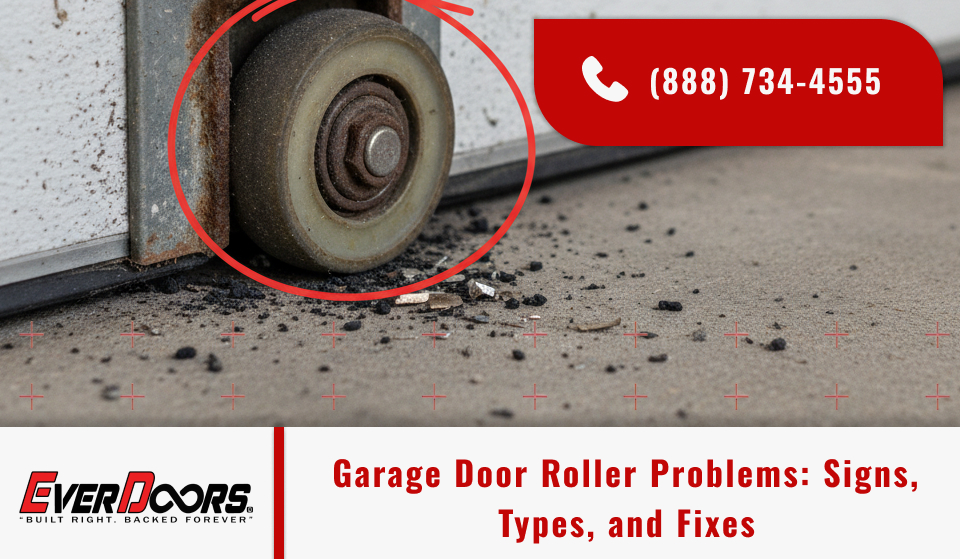
- Furthermore, visible flat spots or chips on the roller wheels
- The door vibrates excessively during opening or closing
- Additionally, rollers that wobble on their stems instead of spinning smoothly
- Black dust or debris on the floor beneath the tracks from deteriorating rollers
- Finally, the door moves crooked or one side travels faster than the other
Worn garage door rollers often start with subtle noise that homeowners ignore. However, the symptoms accelerate quickly once the roller surface deteriorates. Consequently, addressing roller wear at the first sign of noise prevents more expensive repairs.
What Causes Garage Door Roller Problems
Several factors cause rollers to wear out and fail. Specifically, understanding these causes helps you extend roller life and prevent premature failure.
Normal wear and usage Residential garage doors cycle 1,500 or more times per year. Consequently, rollers accumulate significant wear from constant rotation under load. Furthermore, standard steel rollers last approximately 10,000 to 15,000 cycles while nylon rollers last 20,000 cycles or more.
Lack of lubrication Dry roller bearings create friction that accelerates wear and generates grinding sounds. Furthermore, damaged garage door rollers often trace back to years of operation without lubrication. In addition, metal-on-metal contact between the bearing and stem creates heat that weakens the roller.
Track misalignment Bent or misaligned tracks force rollers to grind against the track walls instead of spinning freely. As a result, the roller surface wears unevenly and develops flat spots. Furthermore, a roller fighting a bent track puts strain on the hinges and opener.
Debris in the tracks Dirt, leaves, small rocks, and insect nests inside the tracks obstruct roller movement. Consequently, rollers grind over debris and develop surface damage. In addition, debris creates rough spots in the track that damage every roller that passes through.
Impact damage Bumping the door with a vehicle or heavy objects can crack rollers or bend their stems. Furthermore, a roller with a bent stem sits at an angle inside the track and wears unevenly on one side.
Garage Door Roller Types Explained
Understanding garage door roller types helps you choose the best replacement for your situation. Specifically, each roller material offers different performance characteristics.
Steel rollers (without bearings) Basic steel rollers are the most affordable option. However, they are the loudest and shortest-lived roller type. Furthermore, steel rollers without sealed bearings require frequent lubrication. In addition, they last approximately 10,000 cycles before needing replacement.
Steel rollers (with sealed bearings) Steel rollers with sealed ball bearings operate more smoothly and quietly than basic steel. Consequently, the bearings reduce friction and extend lifespan. Furthermore, they last approximately 15,000 to 20,000 cycles.
Nylon rollers Nylon rollers are significantly quieter than any steel option. Furthermore, they do not require lubrication on the roller surface. In addition, nylon rollers last 20,000 to 25,000 cycles and resist corrosion. Moreover, comparing nylon vs steel garage door rollers shows nylon is the clear winner for noise reduction and low maintenance.
Heavy-duty commercial rollers Commercial rollers feature larger wheels, stronger stems, and higher-capacity bearings. Specifically, they handle heavier doors and more frequent cycling. Furthermore, they are recommended for oversized residential doors and high-use applications.
Choosing the right garage door roller types depends on your noise tolerance, budget, and how often you use the door. Therefore, nylon rollers provide the best value for most residential applications.
Garage Door Roller Replacement Process
Garage door roller replacement restores smooth operation and eliminates noise from worn rollers. Furthermore, knowing when to replace garage door rollers and what the process involves helps you plan the repair.
When replacement is needed:
- Rollers show visible flat spots, cracks, or chips on the wheel surface
- Also, rollers wobble or tilt on their stems
- Furthermore, the door makes grinding sounds despite lubrication
- Rollers are more than 5 years old on a frequently used door
What professional replacement involves:
- The technician secures the door in the open position with clamps
- They remove the hinge bolts to release each roller from the panel
- Each old roller slides out of the track and the new roller slides in
- They reinstall the hinge with the new roller and tighten all bolts
- They test the door through multiple complete cycles to verify smooth operation
- The entire process takes approximately one to two hours for a standard door
Garage door roller replacement costs between 100 and 200 dollars for a full set of nylon rollers including parts and labor. Consequently, this affordable repair eliminates noise, reduces opener strain, and extends the life of your tracks.
How to Prevent Garage Door Roller Problems
Preventing roller problems extends the life of your rollers and the entire door system. Furthermore, most garage door roller issues are preventable with basic maintenance.
Here are effective ways to prevent garage door roller problems:
- Lubricate all roller bearings with white lithium grease or silicone spray every six months
- Also, keep the tracks clean by wiping them with a damp cloth quarterly
- Furthermore, inspect rollers visually during each lubrication for flat spots or wobble
- Listen for new sounds during operation and investigate immediately
- Additionally, never apply lubricant to the roller surface that contacts the track
- Schedule annual professional maintenance that includes roller inspection
- Finally, upgrade from steel to nylon rollers during your next replacement for longer life
These preventive steps take less than ten minutes twice per year. Consequently, consistent roller maintenance prevents the grinding, binding, and track damage that neglected rollers create.
When to Call a Professional
Some roller problems require professional tools and expertise. Therefore, contact a technician for garage door roller problems near you if any of the following apply:
- The door binds or jams at the curved section of the track
- A roller has jumped out of the track completely
- Multiple rollers show wear at the same time
- The door moves crooked or one side drags behind the other
- You hear popping or snapping sounds from the roller area
- You want to upgrade all rollers from steel to nylon
A garage door roller problems expert near you inspects every roller, identifies the failing components, and replaces them with the correct type for your door. Specifically, they verify each new roller sits properly in the track and spins freely. In addition, they check the tracks, hinges, and opener for related damage caused by the worn rollers.
Do not let failing rollers damage your tracks and strain your opener. Instead, call today to schedule your roller inspection and restore quiet smooth operation to your garage door.
Phone: (888) 734-4555
Email: info@everdoors.com
Website: https://www.everdoors.com/