Garage door noise problems disrupt your household and often signal mechanical issues that need immediate attention before they worsen. Noisy garage door problems range from minor annoyances to warning signs of dangerous component failure. A garage door grinding noise usually points to worn rollers, misaligned tracks, or dry bearings that create metal-on-metal contact. Furthermore, a garage door scraping sound indicates parts that are rubbing together and wearing down with every cycle. Garage door squeaking comes from dry hinges, rollers, and springs that need lubrication to operate smoothly. In addition, a squeaky garage door fix is often as simple as applying the right lubricant to the correct components. Garage door rattling means loose hardware, vibrating panels, or worn components that shake during operation.
Likewise, garage door vibration noise puts stress on every connected part and accelerates wear across the entire system. If your door sounds louder than normal, search for garage door noise problems near you to find expert help.
Why Your Garage Door Makes Noise
Every garage door produces some sound during operation. However, new or increasing noise indicates a developing problem that deserves attention.
Here are the most common reasons garage doors become noisy:
- Worn rollers that no longer glide smoothly inside the tracks
- Dry hinges, springs, and bearings that create friction during movement
- Loose bolts, screws, and bracket connections that rattle during operation
- Misaligned tracks that force rollers to scrape against the metal
- An unbalanced door that strains the opener motor and hardware
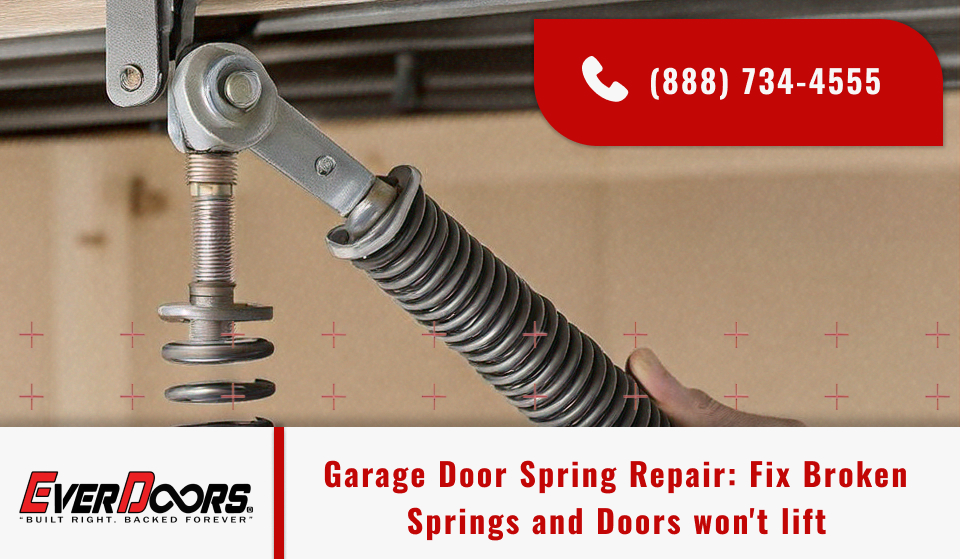
- Worn or damaged springs that vibrate instead of flexing smoothly
- An aging opener with worn gears or a failing motor
Because each sound type points to a different problem, identifying the specific noise helps you determine the urgency and the right repair approach. Therefore, pay attention to when the noise occurs and where it comes from.
What Different Garage Door Sounds Mean
Noisy garage door problems communicate specific issues through the sounds they produce. Specifically, learning to identify each sound helps you describe the problem accurately to a technician.
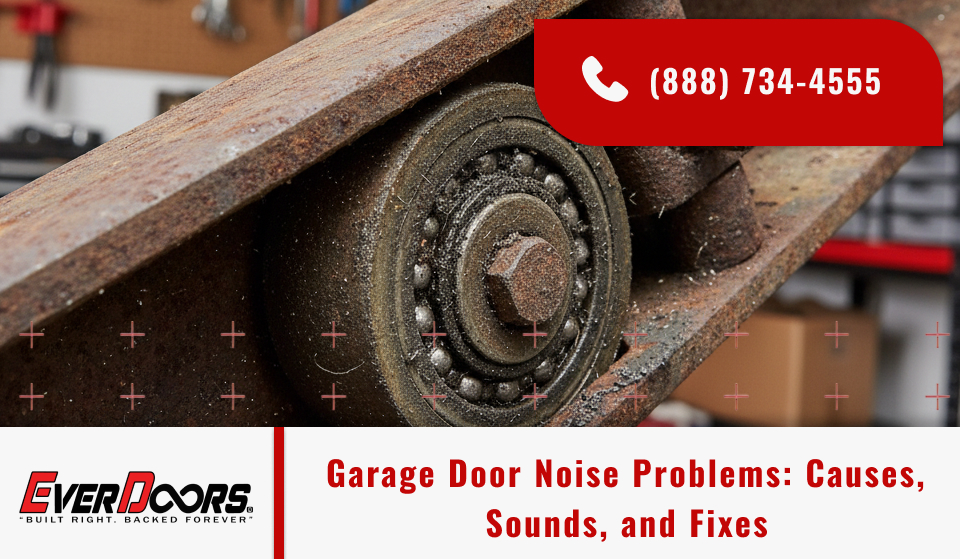
Grinding A garage door grinding noise usually means metal is rubbing against metal without lubrication. Furthermore, worn steel rollers grinding inside the track create the most common grinding sound. In addition, a garage door scraping sound at the same spot during every cycle indicates a track alignment problem or a roller that has gone flat.
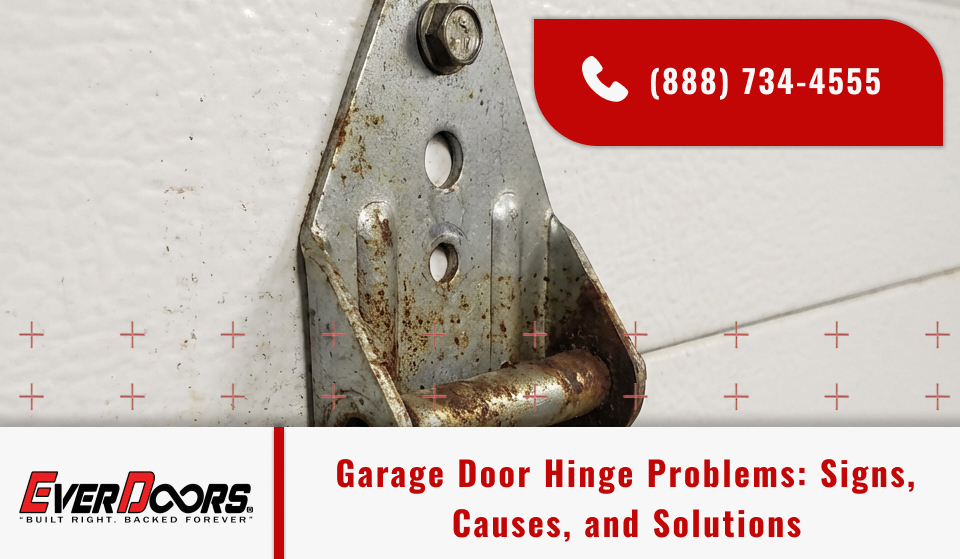
Squeaking and squealing Garage door squeaking comes from dry pivot points on hinges, rollers, and spring coils. Furthermore, the sound gets louder as lubricant dries out completely. In addition, a squeaky garage door fix typically requires applying white lithium grease or silicone spray to every moving joint. Moreover, high-pitched squealing may indicate a worn torsion spring that needs replacement.
Rattling and vibrating Garage door rattling comes from loose nuts, bolts, and screws throughout the door and track system. Consequently, vibration during operation shakes these fasteners loose over time. Furthermore, garage door vibration noise from the opener unit itself may indicate worn gears or a loose chain.
Banging and popping A loud bang during startup or shutdown often means the torsion spring is under uneven tension. Furthermore, popping sounds from the track indicate rollers jumping over flat spots or debris. In addition, a single loud pop during opening can signal a spring that is about to break.
Clicking Repetitive clicking during operation usually points to a problem with the opener’s drive mechanism. Specifically, worn gear teeth or a loose chain create a rhythmic clicking that matches the door’s speed. Furthermore, clicking combined with slow operation indicates the opener is straining to lift the door.
How to Quiet a Noisy Garage Door
Many garage door noise problems are fixable with basic maintenance. Furthermore, these steps address the most common noise sources without requiring professional tools.
Step 1: Lubricate all moving parts First, apply white lithium grease to every hinge pivot point, roller bearing, and spring coil. Specifically, focus on metal-to-metal contact points where friction creates noise. Furthermore, do not use WD-40 as a long-term lubricant because it dries quickly and attracts dust.
Step 2: Tighten all hardware Next, use a socket wrench to tighten every bolt and nut on the track brackets, hinge plates, and rail connections. Consequently, eliminating loose hardware stops most garage door rattling immediately. Moreover, check the opener mounting bolts and the header bracket above the door.
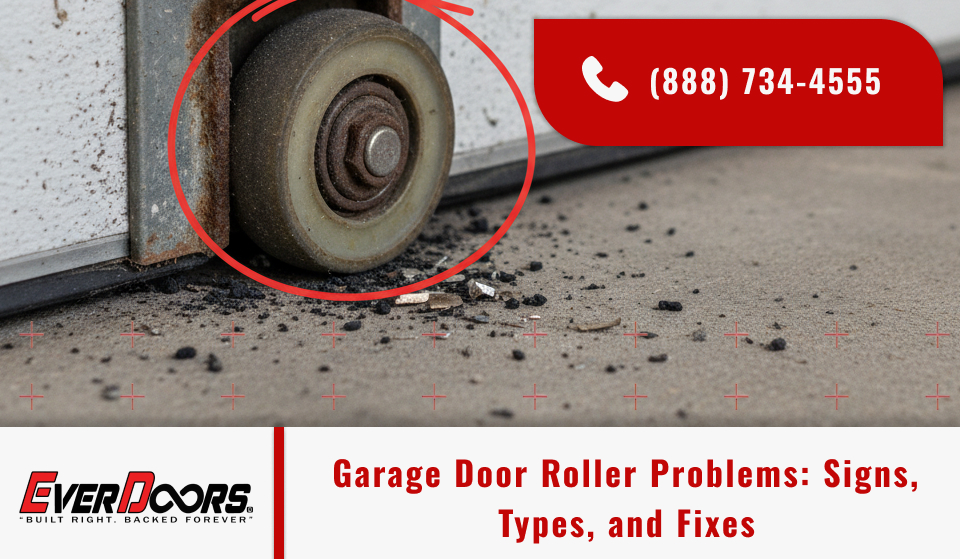
Step 3: Inspect the rollers Then, examine each roller for flat spots, cracks, or excessive wobble. Furthermore, steel rollers that show visible wear should be replaced with nylon rollers. In addition, nylon rollers operate significantly quieter than steel and do not require lubrication on the roller surface.
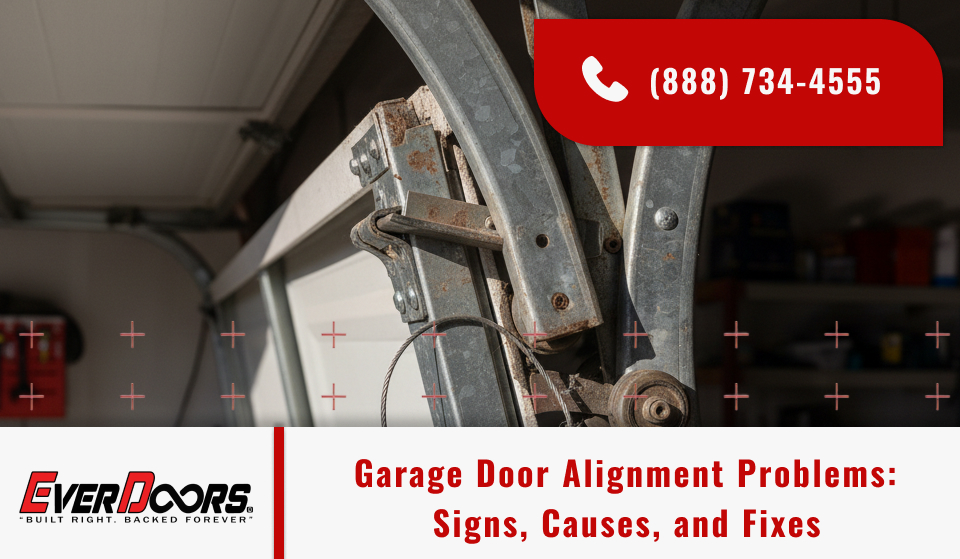
Step 4: Check track alignment After inspecting rollers, look at both tracks from the front of the garage. Specifically, the tracks should be parallel and evenly spaced from top to bottom. Furthermore, a garage door scraping sound at a specific point indicates a track that bows inward or outward at that location.
Step 5: Test door balance Finally, disconnect the opener and lift the door manually to the halfway point. The door should stay in place without rising or falling. However, if the door moves on its own, the springs are out of balance and need professional adjustment.
If these steps reduce but do not eliminate the noise, professional diagnosis identifies deeper issues that basic maintenance cannot address.
When Garage Door Noise Indicates a Serious Problem
Some garage door noise problems signal dangerous conditions that require immediate professional attention. Therefore, stop using the door and call a technician if you hear any of the following.
Here are the warning sounds that indicate serious problems:
- A loud bang or snap followed by the door becoming extremely heavy to lift manually
- Also, grinding that gets progressively louder over days or weeks
- Furthermore, any noise accompanied by the door moving unevenly or crooked
- Clicking from the opener combined with the door barely moving or not moving at all
- Additionally, a continuous high-pitched squeal from the torsion spring area
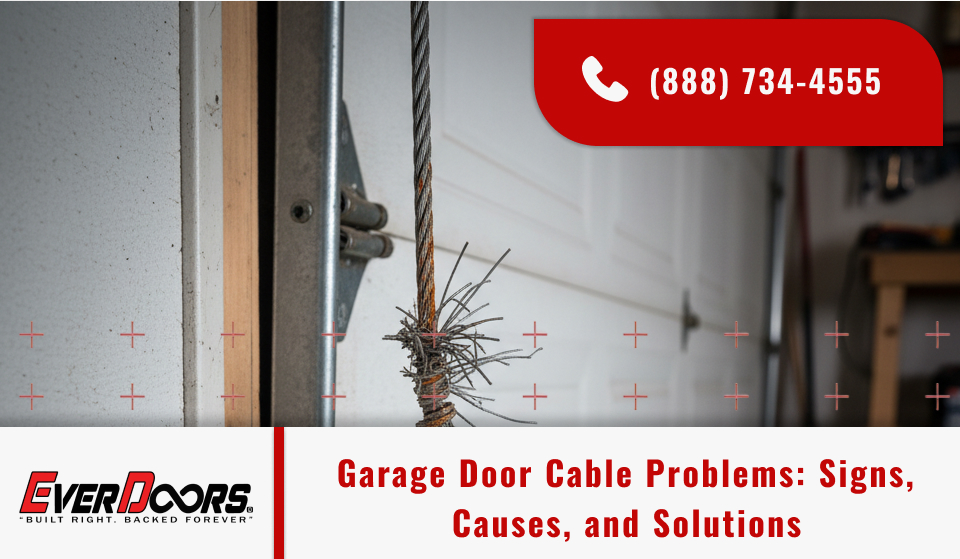
- Popping sounds from the cables or bottom brackets during operation
A loud snap from the spring area almost certainly means a spring has broken. Consequently, operating the door with a broken spring puts extreme strain on the remaining components and the opener motor. Furthermore, broken springs are under tremendous tension and must only be replaced by trained professionals.
How to Prevent Garage Door Noise Problems
Preventing noise keeps your door operating quietly and extends the life of every component. Furthermore, most garage door noise problems are preventable with regular maintenance.
Here are effective ways to prevent noisy garage door problems:
- Lubricate all hinges, rollers, springs, and bearings every six months
- Also, tighten all hardware annually since vibration loosens fasteners over time
- Furthermore, replace steel rollers with nylon rollers for permanent noise reduction
- Keep the tracks clean and free of dirt, debris, and cobwebs
- Additionally, schedule professional maintenance annually for a complete system inspection
- Test door balance every six months by disconnecting the opener and lifting manually
- Finally, address any new sound immediately before it develops into a bigger problem
These preventive steps take less than twenty minutes twice a year. Consequently, consistent maintenance prevents the grinding, squeaking, and rattling that indicate developing mechanical failure.
When to Call a Professional
Some noise problems like garage door rattling, garage door squeaking, and garage door grinding noise require professional tools and expertise to diagnose and fix safely. Therefore, contact a technician for garage door noise problems near you if any of the following apply:
- Lubrication and tightening did not reduce the noise
- The noise comes from the springs, cables, or bottom brackets
- Your door moves unevenly or crooked during operation
- The opener strains or struggles to lift the door
- You hear popping or snapping sounds from the hardware
- The noise appeared suddenly after a storm or impact
A garage door noise problems like garage door rattling, garage door squeaking, and garage door grinding noise have expert near you who identifies every noise source, repairs or replaces the failing components, and tests the entire system for smooth operation. Specifically, they check rollers, tracks, hinges, springs, cables, and the opener to ensure every part works quietly. In addition, they lubricate the full system and tighten all hardware before leaving or else your garage door squeaking and garage door grinding noise will start up again.
Do not let a noisy garage door disrupt your home or hide a dangerous mechanical failure. Instead, call today to schedule your noise inspection and restore quiet, smooth operation to your garage door.
Phone: (888) 734-4555
Email: info@everdoors.com
Website: https://www.everdoors.com/