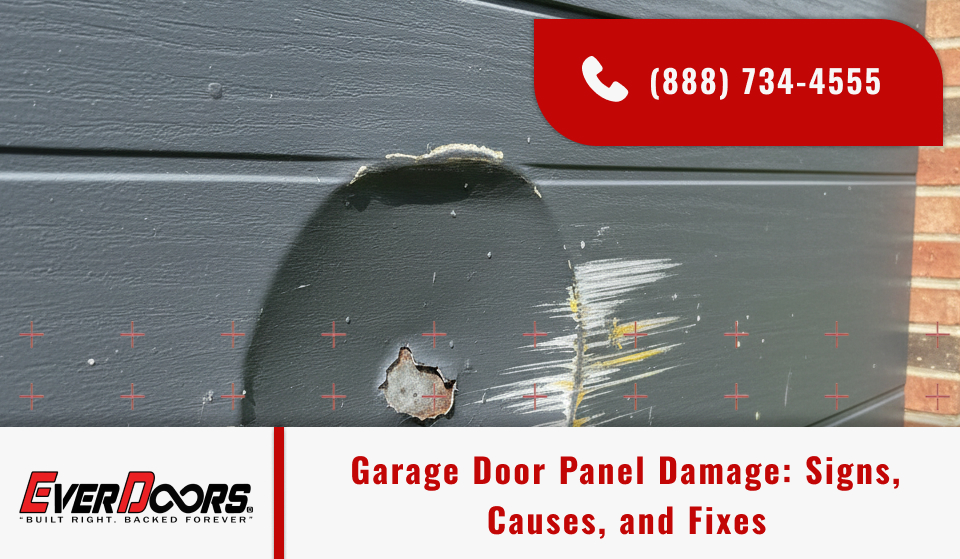
Garage door panel damage affects your home’s curb appeal, security, and energy efficiency all at once. A damaged garage door panel weakens the entire door structure and invites further problems. A dented garage door panel creates pressure points that strain hinges, rollers, and tracks. In addition, professional garage door dent repair restores the panel surface without full replacement. Garage door panel replacement becomes necessary when damage is too severe for a simple fix. Furthermore, hiring a professional to replace a garage door panel ensures proper fit and alignment. A cracked garage door panel lets cold air, moisture, and pests enter your garage freely. Likewise, a broken garage door section compromises the safety of your entire system. If your panels show visible damage, search for garage door panel damage near you, dented garage door panel, or cracked garage door panel to get expert help fast.
What Causes Garage Door Panel Damage
Garage door panels take a beating from daily use and environmental factors. However, understanding the most common causes helps you prevent damage before it happens.
Here are the leading causes of garage door panel damage:
- Accidental vehicle impact from pulling in or backing out too quickly
- Basketballs, baseballs, and other objects hitting the door surface
- Severe weather including hail, high winds, and falling tree branches
- Normal wear and aging that weakens the panel material over time
- Improper tension in springs causing the door to slam shut
- Failed rollers or tracks that force panels out of alignment
Because most panel damage starts small, catching it early prevents the problem from spreading. Therefore, regular visual inspections save you from costly repairs down the road.
Signs You Have a Damaged Garage Door Panel
A damaged garage door panel does not always look obvious from a distance. In fact, some damage only becomes apparent during close inspection or when the door operates. Watch for these common warning signs:
- Visible dents, creases, or bends on the panel surface
- Cracks running along the panel face or edges
- Gaps between panels that let light or air through
- The door shakes or vibrates more than usual during operation
- One section of the door sits higher or lower than the rest
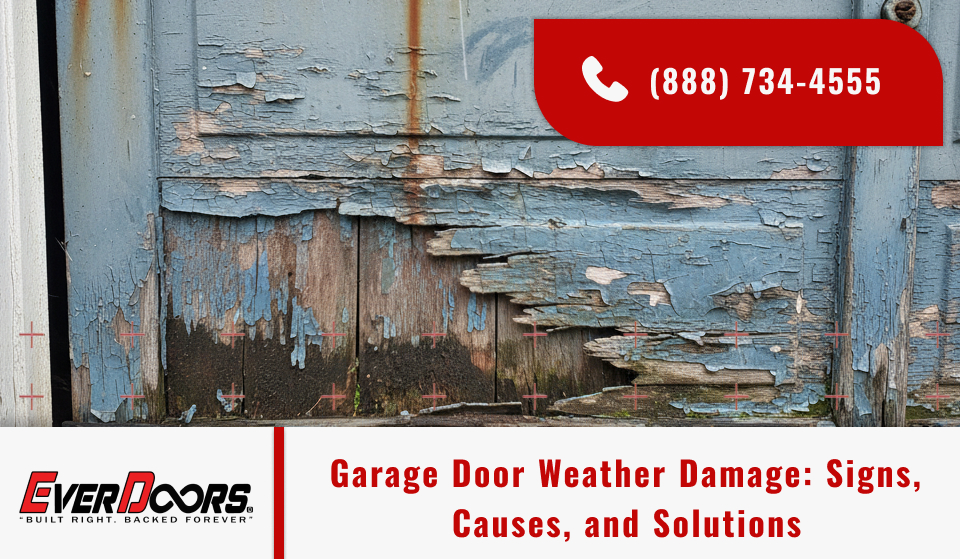
- Peeling paint or rust forming around a damaged area
- The door sticks or binds at certain points along the track
If you notice several of these signs, your panels need professional attention. Moreover, operating a door with damaged panels puts additional stress on the opener, springs, and cables. Consequently, a small panel problem can quickly trigger a chain reaction of failures.
Dented Garage Door Panel: Can You Fix It or Should You Replace It
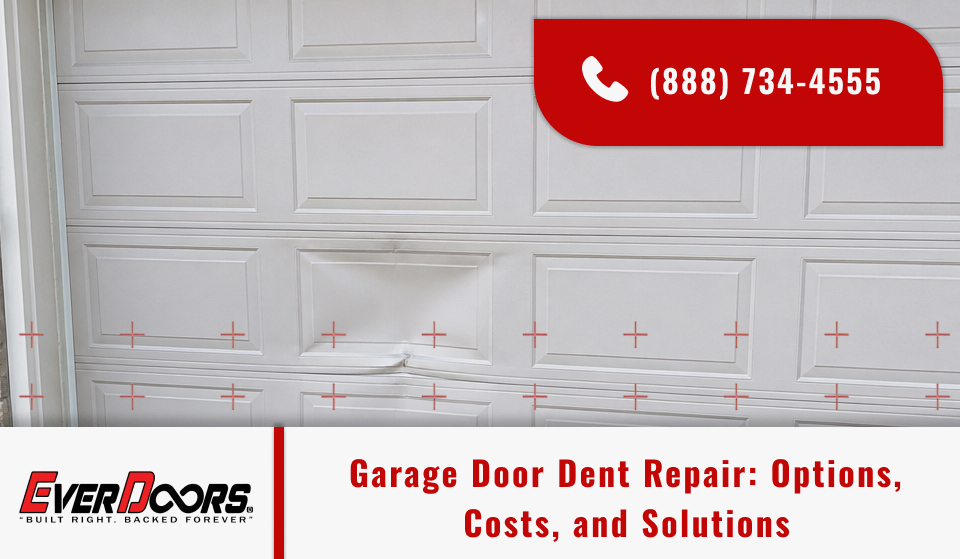
A dented garage door panel is the most common type of damage homeowners encounter. However, the best solution depends on the severity and location of the dent.
Minor dents Small dents without creases or paint damage often respond well to repair. Specifically, a technician uses specialized tools to push the metal back into shape. In addition, professional garage door dent repair costs significantly less than full panel replacement. Therefore, addressing minor dents early is the most budget-friendly approach.
Moderate dents with creases Dents that include sharp creases or paint cracking are harder to repair. As a result, the panel may look uneven even after a repair attempt. Furthermore, creased metal is structurally weaker than smooth metal. In these cases, replacement usually delivers a better long-term result.
Severe dents or multiple dents When a panel has deep dents, multiple impact points, or visible bending, garage door dent repair is rarely effective. Instead, a full garage door panel replacement restores both the appearance and structural integrity of the door. Consequently, the investment protects the rest of your system from secondary damage.
How Cracked Garage Door Panels Affect Your Home
A cracked garage door panel creates problems that go far beyond appearance. In fact, cracks compromise the security, insulation, and safety of your entire garage.
Security risks Cracks weaken the panel structure and make it easier for intruders to force entry. Moreover, a broken garage door section creates visible vulnerabilities that attract unwanted attention. Therefore, replacing cracked panels promptly protects your home and belongings.
Energy loss Cracks and gaps allow outside air to flow freely into your garage. As a result, your heating and cooling systems work harder to maintain comfortable temperatures in adjacent rooms. Furthermore, a cracked garage door panel in an insulated door eliminates the insulation benefit entirely.
Moisture and pest entry Even small cracks let rainwater seep into your garage during storms. In addition, insects, mice, and other pests use cracks as entry points. Consequently, what starts as a cosmetic issue can lead to water damage, mold growth, and pest infestations.
Safety concerns A cracked panel under spring tension can break apart during operation. Specifically, the broken garage door section may separate from the rest of the door. This creates a serious hazard for anyone standing nearby. Therefore, never continue using a door with severely cracked panels.
Garage Door Panel Replacement: What to Expect
Garage door panel replacement is the best solution when repair is not practical. Specifically, a professional replaces only the damaged section rather than the entire door. This saves money while restoring full function and appearance.
Here is what happens during a typical panel replacement:
Step 1: Assessment First, the technician inspects the damaged panel and the surrounding components. They check hinges, rollers, tracks, and weatherstripping for related damage.
Step 2: Panel matching Next, the technician identifies the correct replacement panel for your door model. Specifically, they match the size, style, color, and material to your existing panels. However, older or discontinued doors may require a custom order.
Step 3: Removal Then, the technician secures the door and disconnects the damaged panel from the hinges and hardware. They work carefully to avoid disturbing the adjacent panels.
Step 4: Installation After removal, the technician installs the new panel and reattaches all hinges, rollers, and weatherstripping. They also replace any garage door panel hardware that shows wear.
Step 5: Testing Finally, the technician operates the door several times to verify smooth movement and proper alignment. They adjust the tracks and balance if the new panel changes the door weight.
A professional can replace a garage door panel in about one to three hours. As a result, your door looks and operates like new the same day.
Should You Repair One Panel or Replace the Entire Door
This is one of the most common questions homeowners ask after discovering panel damage. Therefore, here is a simple guide to help you decide.
Repair or replace one panel when:
- Only one or two panels show damage
- The damage is limited to dents without structural cracking
- Replacement panels are available for your door model
- The rest of the door is in good condition
- Your door is less than 15 years old
Replace the entire door when:
- Three or more panels have significant damage
- Replacement panels are no longer available for your model
- The door is more than 15 to 20 years old
- Multiple components including tracks, springs, and rollers also need repair
- You want to upgrade to an insulated or modern style door
In many cases, replacing a single panel costs 200 to 500 dollars. However, a full door replacement ranges from 800 to 2500 dollars depending on size and material. Therefore, repairing one panel saves significant money when the rest of the door is sound.
How to Prevent Garage Door Panel Damage
Prevention costs far less than repair or replacement. In fact, simple habits protect your panels from the most common types of damage. Follow these tips to keep your garage door panels in top condition:
- Park carefully and use a tennis ball guide or laser parking assist
- Also, keep the area in front of the door clear of bikes, tools, and toys
- Furthermore, trim tree branches that hang near or over your garage
- Install a rubber bumper or door stop at the bottom of the travel path
- Additionally, schedule annual professional tune-ups to check spring tension and balance
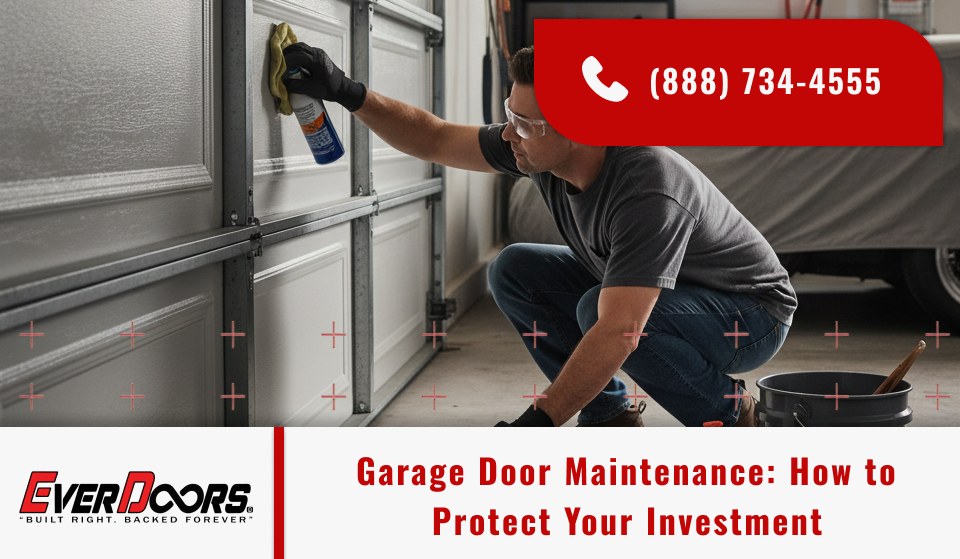
- Finally, apply touch-up paint to scratches before rust develops
These habits prevent most accidental damage. Moreover, annual maintenance catches small problems before they grow. Consequently, your panels stay looking great and functioning properly for years.
When to Call a Professional for Garage Door Panel Damage Near You
Some panel damage requires professional diagnosis and repair. Therefore, contact a technician if any of the following situations apply:
- A panel is cracked, split, or separating from the door
- The door binds, sticks, or shakes during operation after an impact
- You cannot find a matching replacement panel on your own
- The damage affects the door’s balance or alignment
- Multiple panels show signs of wear or deterioration at the same time
A professional garage door panel damage expert near you handles everything from minor dent repair to full panel replacement. Specifically, they carry the tools and parts needed for a same-day fix in most cases. In addition, they inspect the rest of your system to catch any secondary damage.
Do not wait for a damaged panel to fail completely. Instead, address the problem at the first sign of trouble. Call today to schedule your inspection and get a free estimate.
Phone: (888) 734-4555
Email: info@everdoors.com
Website: https://www.everdoors.com/